Investing in Communities - Strength, Growth and Partnerships

Investing in Communities – Strength, Growth and Partnerships Fund

Information Pack for Strength and Growth Fund

We’ve been working with organisations in the voluntary, community, faith and social enterprise sector to co-design a £2.2million investment into the sector from Public Health reserves as part of the commitments we made in last year’s Communities Strategy.

The Task and Finish Group was made up of 27 representatives from a range of groups and organisations in the city. This group shaped the purpose of this fund and made recommendations for how the fund should be managed.

We heard some consistent messages over three

Investing in Communities – Strength, Growth and Partnerships Fund

Information Pack for Strength and Growth Fund

We’ve been working with organisations in the voluntary, community, faith and social enterprise sector to co-design a £2.2million investment into the sector from Public Health reserves as part of the commitments we made in last year’s Communities Strategy.

The Task and Finish Group was made up of 27 representatives from a range of groups and organisations in the city. This group shaped the purpose of this fund and made recommendations for how the fund should be managed.

We heard some consistent messages over three workshops:

  • Pressure is mounting for the sector with increased demand for services and high competition for funding.
  • Attendees wanted this funding to enable growth, learning, sustainability and collaboration.
  • They also highlighted the need for flexible funding to meet immediate and emerging needs, cover funding gaps, and to create space for strategic thinking and innovation.
  • There was a huge appetite for funding to enable collaboration and shared resources.
  • People wanted to see funding based on trust, a relational approach and that enables learning.

These recommendations were shaped up further by a smaller Technical Group which helped to create the application process and scoring criteria and a separate stream to encourage collaboration.

Small Grants

Strength and Growth Fund

Partnerships and Collaboration Fund

  • Up to £200k to South Yorkshire Community Foundation
  • Grants of up to £5k
  • Enabling the foundation to increase the number of grants in an oversubscribed fund
  • Applications closed
  • £1.5m total pot
  • Grants of up to £50k
  • Investing in groups and organisations’ stability and sustainability
  • Survey launched in July
  • Applications open September
  • £500k total pot
  • Up to £100k
  • Investing in existing and emerging partnerships in the city
  • Timeline TBC

We will share the application process for the Strength and Growth Fund on this page.

You can read more about the Strength and Growth Fund in the Information Pack on this page.

In the meantime, if you'd like to apply for this fund, make sure you complete the survey below.

This fund is part of the council's commitment to Renew our relationship with community groups and organisations in the city.You can read more about this on the Working Better Together page.

  • Engagement Summary

    Session 1: Introductory Session

    In the first meeting in November we aimed to do two things: agree on our ways of working and decide what we wanted to achieve with this investment.

    Our ways of working conversation helped us to bring out two core principles along with some of the more predictable ones:

    • “Good enough for now, safe enough to try”
    • “This is bigger than us”

    These principles have been highlighted throughout the co-design process to enable us to make progress and move forward and consider those who aren’t in the room.

    When starting to talk about purpose, some strong themes came through the conversation:

    • “Trust” this investment should be used in a way that demonstrates trust in organisations to use the funds
    • “Learning” the fund should be focused on learning rather than strict monitoring or “bums on seats”
    • Many participants said that they wanted this funding to enable collaboration and shared resources and infrastructure
    • There was also a clear tension between using this funding to meet organisations’ immediate needs and keep their doors open or using this as an investment into organisations’ capacity and sustainability.

    We didn’t manage to agree on the purpose at this meeting, and decided to follow up with the group during one-to-one calls to hear different perspectives outside of the group setting.

    Some of the feedback on this meeting was for officers to talk less and create more space for conversation, which we took on board full heartedly for the following sessions.

    Session 2: Purpose

    In January the Task and Finish group discussed two streams of funding that had emerged during Session 1 and our one-to-ones.

    • Immediate Needs
    • Future-proofing

    For each stream we spoke about:

    1. What we would want to achieve with this stream
    2. What type of thing we might fund
    3. How we prioritise what we fund

    Throughout the session, one message became clear: you can’t separate funding immediate needs from future-proofing. When organisations are under pressure financially, or struggling to meet demand, this often means that leaders spend their time firefighting

    Session 3: Process

    This session in March generated some really useful recommendations for how this fund should be managed.

    The group worked on six stations around the room to discuss:

    • How organisations / groups apply for funding
    • How proposals are selected
    • How much organisations / groups could apply for
    • What we won’t fund
    • Due diligence / organisation health
    • How we support and encourage partnerships / collaboration

    Technical Group

    In April we started working with a smaller technical group with representatives from the VCFSE with experience in governance and grant-giving to take forward the recommendations from the Task and Finish Group. This group formed while a restructure was announced on the council Grants team, which meant we needed to be pragmatic in our approach while staying as true to the recommendations of the original group as possible.

    This group reflected on the outputs from the Task and Finish Group to firm up the plans for this investment:

    • Funding Tiers
    • Applications
    • Proposal Criteria
    • A Supportive Process

    We also worked with this group to define three separate pots:

    1. Smaller Grants <£5k
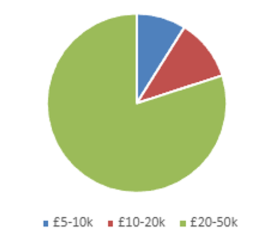
    2. Main Grants Pot £5k-£50k
    3. Partnerships and Collaboration up to £100k

    After some discussion about the need for small grants of less than £5000 with other opportunities like Ward Pots available, we agreed as a group to use a small portion of the total fund to enable South Yorkshire Community Foundation to support eligible Sheffield-based applications from a highly oversubscribed grant fund. This felt like a pragmatic use of the funding, with applications already written and assessed.

    Session 1: Introductory Session

    In the first meeting in November we aimed to do two things: agree on our ways of working and decide what we wanted to achieve with this investment.

    Our ways of working conversation helped us to bring out two core principles along with some of the more predictable ones:

    • “Good enough for now, safe enough to try”
    • “This is bigger than us”

    These principles have been highlighted throughout the co-design process to enable us to make progress and move forward and consider those who aren’t in the room.

    When starting to talk about purpose, some strong themes came through the conversation:

    • “Trust” this investment should be used in a way that demonstrates trust in organisations to use the funds
    • “Learning” the fund should be focused on learning rather than strict monitoring or “bums on seats”
    • Many participants said that they wanted this funding to enable collaboration and shared resources and infrastructure
    • There was also a clear tension between using this funding to meet organisations’ immediate needs and keep their doors open or using this as an investment into organisations’ capacity and sustainability.

    We didn’t manage to agree on the purpose at this meeting, and decided to follow up with the group during one-to-one calls to hear different perspectives outside of the group setting.

    Some of the feedback on this meeting was for officers to talk less and create more space for conversation, which we took on board full heartedly for the following sessions.

    Session 2: Purpose

    In January the Task and Finish group discussed two streams of funding that had emerged during Session 1 and our one-to-ones.

    • Immediate Needs
    • Future-proofing

    For each stream we spoke about:

    1. What we would want to achieve with this stream
    2. What type of thing we might fund
    3. How we prioritise what we fund

    Throughout the session, one message became clear: you can’t separate funding immediate needs from future-proofing. When organisations are under pressure financially, or struggling to meet demand, this often means that leaders spend their time firefighting

    Session 3: Process

    This session in March generated some really useful recommendations for how this fund should be managed.

    The group worked on six stations around the room to discuss:

    • How organisations / groups apply for funding
    • How proposals are selected
    • How much organisations / groups could apply for
    • What we won’t fund
    • Due diligence / organisation health
    • How we support and encourage partnerships / collaboration

    Technical Group

    In April we started working with a smaller technical group with representatives from the VCFSE with experience in governance and grant-giving to take forward the recommendations from the Task and Finish Group. This group formed while a restructure was announced on the council Grants team, which meant we needed to be pragmatic in our approach while staying as true to the recommendations of the original group as possible.

    This group reflected on the outputs from the Task and Finish Group to firm up the plans for this investment:

    • Funding Tiers
    • Applications
    • Proposal Criteria
    • A Supportive Process

    We also worked with this group to define three separate pots:

    1. Smaller Grants <£5k
    2. Main Grants Pot £5k-£50k
    3. Partnerships and Collaboration up to £100k

    After some discussion about the need for small grants of less than £5000 with other opportunities like Ward Pots available, we agreed as a group to use a small portion of the total fund to enable South Yorkshire Community Foundation to support eligible Sheffield-based applications from a highly oversubscribed grant fund. This felt like a pragmatic use of the funding, with applications already written and assessed.

Page last updated: 16 Jul 2026, 03:47 PM