Consultation about Replacing Damaging Trees on Eyre Street, Sheffield, S1.
*Results Update*
Thank you to all who participated in this consultation for your valuable feedback.
The final outcomes were:
- 83% of responses objected to the proposals
- 17% of responses were in favour of the proposals
- 1 response selected the “don’t know” option, noting that our software does not include these in the final percentage outcomes.
A large amount of extensive feedback was submitted via the free text boxes in the forms, which officers will now review and then seek to discuss with the Street Tree Partnership before any decisions are made.
The council has taken account of this feedback and there are no plans to remove the trees for the time being.
---
An investigation has been carried out on 30 trees on Eyre Street, S1.
Eight Metasequoia glyptostoboides (commonly known as Dawn Redwood) have been identified as causing irreparable damage to the highway network (pictured below).
Currently, engineering solutions are being employed to retain 22 of the 30 trees, where this is practicable.
In each of the eight cases shown below, tree root damage is causing the pavement to be significantly raised in places, due to tree root growth and spread. The roots are lifting and displacing stone and clay paving, including tree pit stone edgings. The uneven surfacing, which includes gaps in the pavement, has created trip hazards, which all pavement users are currently exposed to.
We appreciate that these trees are valuable, but are not the right trees for the space they have been planted in. This species of tree grows at such a rate that it would be very difficult to manage this growth and the stability and safety of highway infrastructure in a busy city centre setting.
Please note - these photos are also shown on the attached widget, with an additional wider image for each tree.
Therefore, the trees listed below are proposed for replacement:
12054574 – Eyre Street - Opposite Jury’s Inn (next to ‘end of bus lane’ sign).
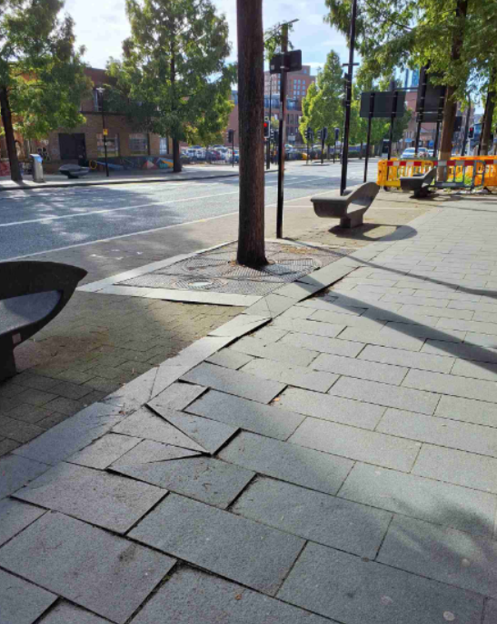
12054576 – Eyre Street – Opposite Duke Lane (next to street lighting column number 44)
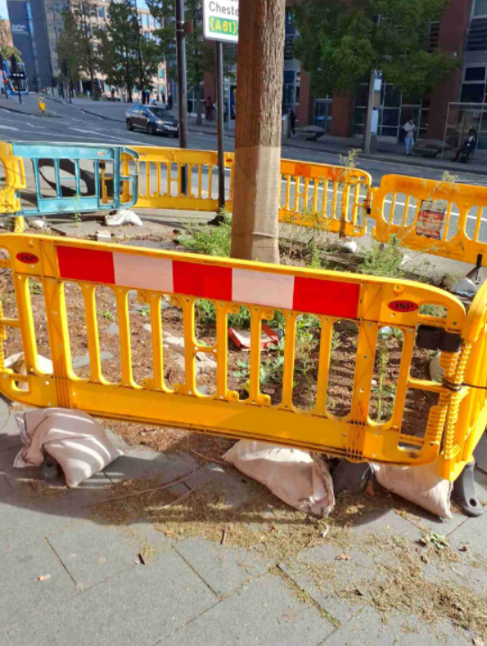
12054578 – Eyre Street - Outside no. 30 Eyre Street (adjacent to Matilda Street)
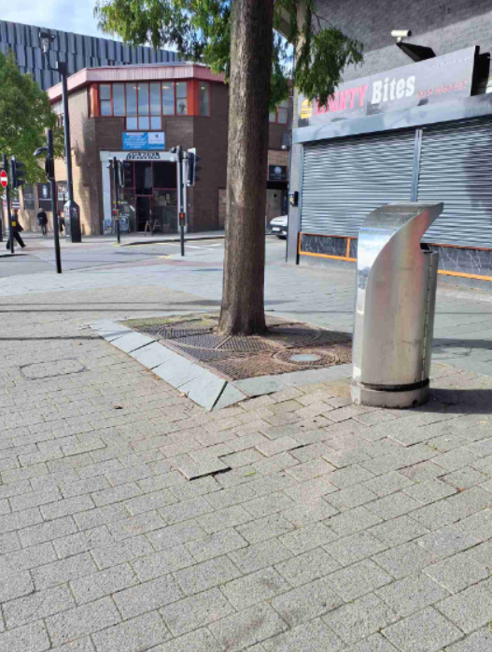
12054580 – Eyre Street – Adjacent to junction of Matilda Street and bus stop ES1
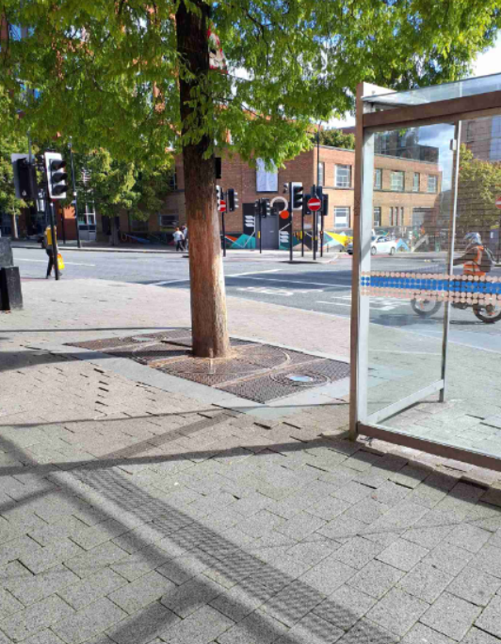
12054582 – Eyre Street – between bus stops ES1 and ES2
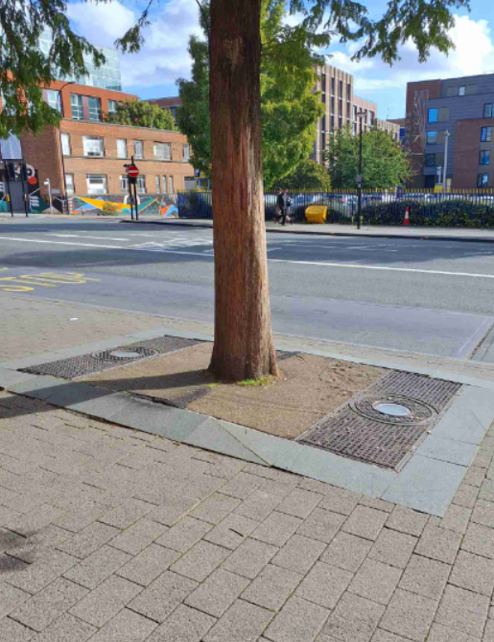
12054584 – Eyre Street – Outside 32 Eyre Street (2nd Tree to the right of Hereford Street)
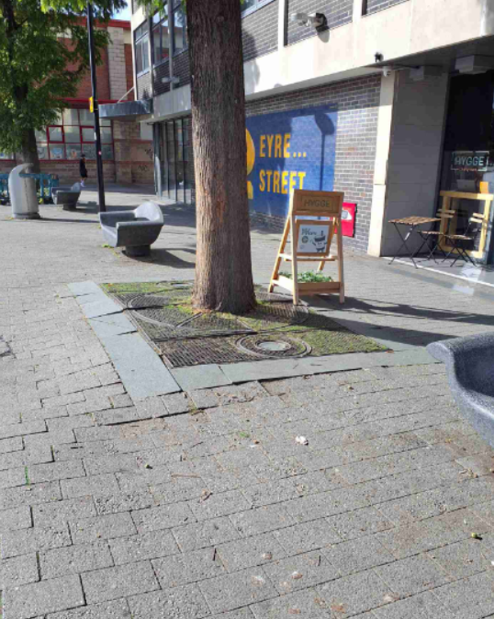
12054586 – Eyre Street – Adjacent to Hereford Street (behind street lighting column number 7)
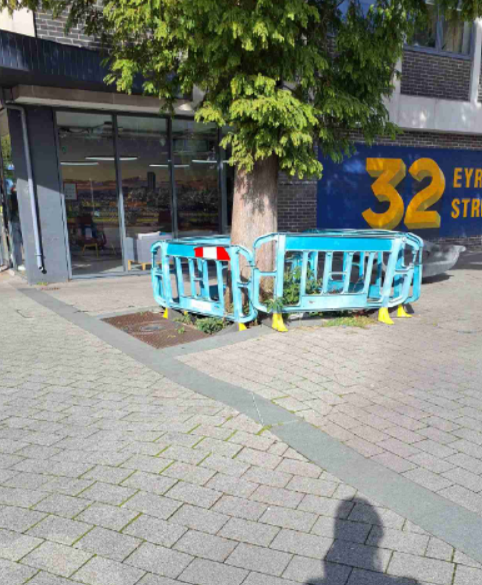
12054589 – Eyre Street – Between Matilda Street & Duke Lane
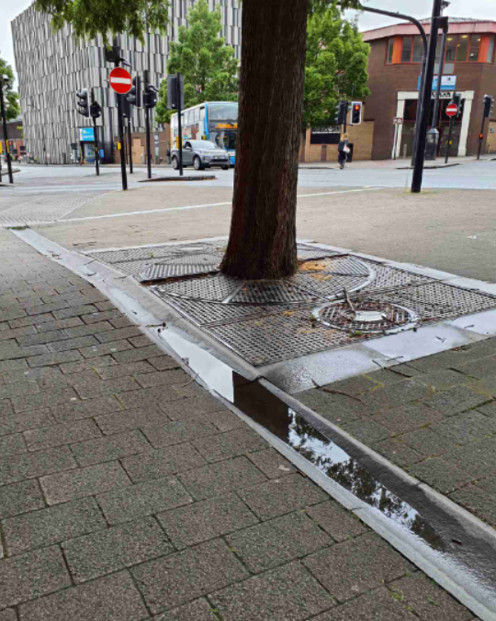
An assessment has been carried out by our highway experts into the damage caused by trees along the length of Eyre Street, in the City Centre.
Every one of these trees was subjected to a significant site investigation and root excavation. The results showed that these eight trees are not able to be retained, and will therefore need to be replaced.
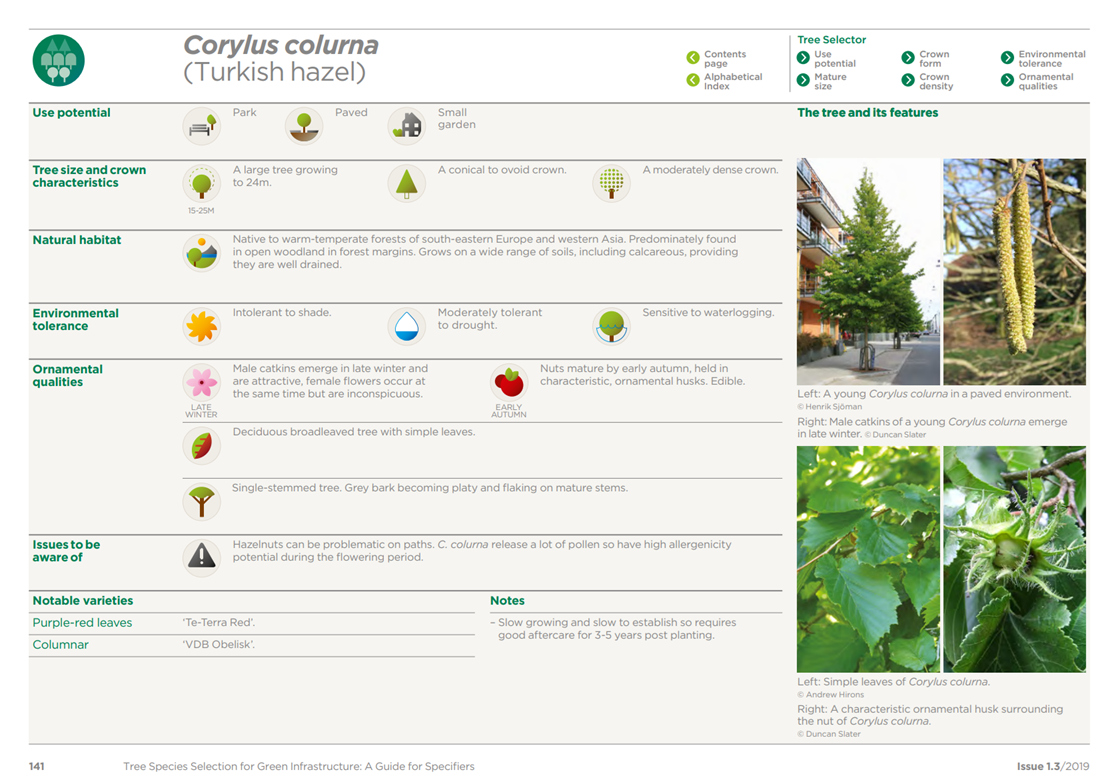
If removed, we propose to replace each of them with a Corylus colurna (commonly known as Turkish hazel), which we will use our best endeavours to plant in the same locations as the original trees. However, this may not always be possible in situations such as where there are underground services, cables, or if it is found that a specific location is not appropriate.
This species of tree has been selected by our professional arboricultural inspectors as being a suitable highway tree species for this location. More information about Corylus colurna (Turkish hazel) is below. This has been taken from Page 141 of The Tree Species Selection for Green Infrastructure: A Guide for Specifiers. This can be found here: tdag.org.uk/uploads/4/2/8/0/4280686/tdag_treespeciesguidev1.3.pdf